
Advancing RNA vaccines for global biosecurity
Professor Cleo Kontoravdi
Professor of Biological Systems Engineering, Imperial College London
During the COVID-19 pandemic, RNA vaccines were deployed at scale for the first time, and they saved millions of lives.
This technology is essential for pandemic preparedness: it is versatile and can rapidly be configured to combat new pathogens, natural or engineered, and is based on a rather simple and fast manufacturing platform.
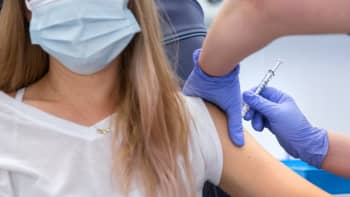
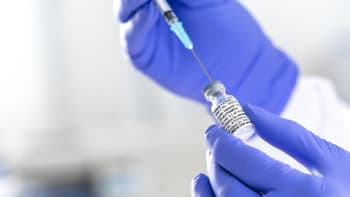
RNA (ribonucleic acid) exists in all life on Earth and can contain instructions from DNA to create specific proteins. In vaccines, it delivers instructions to create a piece of protein that is identical to the one found in a pathogen. When injected into our body, our immune system responds by developing antibodies that are ready to fight the real virus when we are exposed to it.
As a relatively new technology, however, RNA vaccines still require development to reach their full potential. At Imperial College London, we are working with collaborators to overcome current challenges to meet future biosecurity threats.
This type of vaccine can be quickly reconfigured for new strains of pathogens and new threats. RNA vaccines do not contain live viruses and so avoid some of the concerns of other vaccine technologies. They also do not require engineered cells, which take time to produce, and are cheap to produce at scale.
But RNA is also very fragile and breaks down unless carefully transported and handled. For example, RNA vaccines must be kept at ultra-low temperatures so that they don’t degrade.
This was a significant issue during the COVID-19 pandemic. In a 2022 journal article, we showed that the cold-chain requirements of transporting and administering RNA COVID vaccines were more expensive than the manufacturing costs of the vaccinations themselves.
Consequently, many remote locations and populations, such as in sub-Saharan Africa, were unable to benefit from this technology. Vaccine accessibility was a significant problem during the pandemic, and this was particularly true to RNA vaccines. One of the reasons behind this inequity was the fragility of RNA vaccines, which makes them expensive to transport and necessitates an ultra-cold supply chain that is not widely available.
At Imperial, we have invested heavily in developing resilient RNA platforms. My colleagues and I are investigating ways to optimise RNA formulations to protect them during transportation and administration, as well as inside the body once it has been injected.
The goal is to ensure that high-quality RNA vaccines are accessible to as many people as possible.
"At Imperial, we have invested heavily in developing resilient RNA platforms. The goal is to ensure that high-quality RNA vaccines are accessible to as many people as possible."
Professor Cleo Kontoravdi, Professor of Biological Systems Engineering, Imperial College London
Another important aspect of RNA research is to ensure that these vaccines are high-quality. During the COVID-19 pandemic, we were able to produce large quantities of vaccine material in two days, but it took months to ensure that it was of high enough quality for it to be sent out to vaccination clinics.
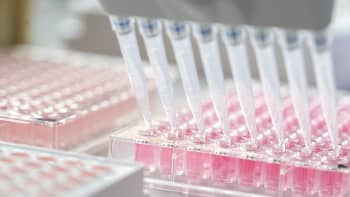
Imperial researchers are investigating whether measurements taken during the production process can indicate the quality of the final product. We have developed predictive models that will allow us, based on these measurements, to say whether the product is of a high enough quality to be injected into people.
In another project with researchers from Kings College London and start-up biotech company Centillion – funded by the Wellcome Leap program – we have developed a modular system that has a continuous RNA production reactor.
Such systems that could be placed at remote locations or in countries that do not have established manufacturing facilities, enabling vaccine production. This can help us ensure that history does not repeat itself and that high-quality vaccines are available where they are needed.
No one is safe unless everyone is safe. Increasing access to RNA vaccines will make people around the world safer from biosecurity threats.

Biosecurity at the frontier
On Wednesday 10 June, Imperial will hold a high-level conference, Biosecurity at the frontier, bringing together global leaders to examine emerging biological threats and the actions needed to address them. Moving beyond analysis, the conference will focus on building the frameworks, partnerships, and capabilities required to strengthen biosecurity globally.
 Built with Shorthand