
Building the next generation of biosurveillance with Lab-on-Chip technology
Professor Pantelis Georgiou
Professor of Biomedical Electronics, Imperial College London
The COVID-19 pandemic demonstrated the power of having diagnostic capacity outside of hospitals.
During the crisis, countries including the UK, the US, and several European countries ran mass testing campaigns, with rapid testing in ports, airports, and even in homes. This near-real-time information fed into national surveillance systems, and allowed authorities to pinpoint COVID-19 hotspots, rally resources in those areas, and ultimately save lives.
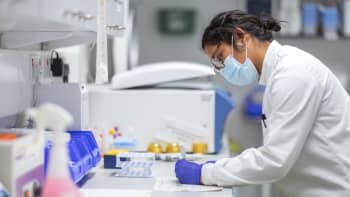
This challenge will only become more important in the coming years. Disease surveillance among humans and animals is a critical component of biosecurity, but at the moment there are few portable technologies that can give high-quality diagnostic information similar to the output of a PCR machine. As the world faces an increasing number of biosecurity hazards and threats, it is vitally important that governments and health systems improve their biosurveillance.
In well-resourced countries, it can take days or weeks to transport and process human samples in government laboratories. It can be even longer for animal samples. The situation is more acute in developing countries, where health ministries struggle with capacity and resources.
And at each stage of this process, the samples come into contact with more people, increasing the risk of something going wrong and pathogens potentially infecting people or escaping into the environment. By the time results are available, the disease could have spread and the opportunity for early containment may have passed.
Poor diagnostic capacity is also contributing to the rise of antimicrobial resistance (AMR). When confronted with a critically ill patient who displays the symptoms of an infection that could be bacterial or viral, doctors often choose to prescribe antibiotics. This is contributing to pathogen evolution and resistance.
In response to this global diagnostic gap, I, along with my colleagues from Imperial College London, Dr. Jesus Rodriguez Manzano and Dr. Nicolas Moser, spun out ProtonDx: a life sciences company that develops diagnostics and sample-processing technologies.
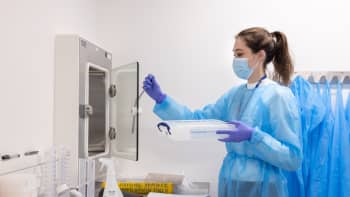
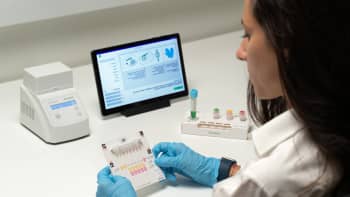
Its portable Lacewing diagnostic test is a ‘lab on a chip’, that enables highly sensitive and highly specific infection detection, delivering laboratory‑quality results virtually anywhere. The system comprises a cartridge and an electronic reader. ProtonDx’s sample extraction technology within the cartridge is able to extract nucleic acids from several sample types such as blood, tissue and nasal swabs, without the need for large, expensive equipment.
The resulting fluid is channelled towards the cartridge’s microchip, which contains several primers. Each primer targets a different pathogen, meaning that Lacewing can screen for multiple diseases simultaneously. ProtonDx produces a variety of diagnostic panels, each of which targets a different symptom cluster, such as respiratory infections, common fevers, and tropical infections. The test, from sample to diagnosis, takes about 30 minutes.
In healthcare settings, such information can assist healthcare professionals to determine the best course of treatment. In developing countries, for example, fevers in children are a common and often fatal problem in areas with a high number of disease-causing agents. An immediate diagnosis, which identifies or rules out pathogens, could save lives.
The diagnosis can also be communicated in real-time to a surveillance network. The system can transmit its findings to a smartphone via Bluetooth, which can sync to the cloud for population-wide monitoring.
Importantly, it is also possible to design bespoke cartridges for new emergent pathogens. For years, Imperial has been building up its expertise in this area and can develop these chemistries and deposit them on the chip within weeks. Deploying and validating the cartridges would be a matter of months.
Biosecurity threats are increasing. Health systems need to improve their surveillance, so that they can identify and neutralise outbreaks before they turn into pandemics. Point-of-care diagnostics are a crucial element of this biosurveillance.


"Health systems need to improve their surveillance, so that they can identify and neutralise outbreaks before they turn into pandemics. Point-of-care diagnostics are a crucial element of this biosurveillance.”
Professor Pantelis Georgiou, Professor of Biomedical Electronics, Imperial College London
Biosecurity at the frontier
On Wednesday 10 June, Imperial will hold a high-level conference, Biosecurity at the frontier, bringing together global leaders to examine emerging biological threats and the actions needed to address them. Moving beyond analysis, the conference will focus on building the frameworks, partnerships, and capabilities required to strengthen biosecurity globally.
 Built with Shorthand