
Establishing a blueprint for safe biosecurity research
Professor Wendy Barclay
Regius Professor of Infectious Disease, Imperial College London
Most viruses that make humans ill used to infect animals only. But spillover events that can lead to outbreaks and pandemics are becoming more frequent. Climate change and human activities such as deforestation and high-intensity animal agriculture increase the risk of animal diseases jumping into humans.
Pandemic preparedness hinges on predicting which pathogens are most likely to become a problem. This requires a broad biosecurity framework that combines surveillance, modelling and public health preparedness with laboratory science.
However, studying viruses with pandemic potential in the laboratory – which sometimes involves genetically engineering dangerous viruses in the laboratory to understand how they might evolve in the natural world – comes with security risks of its own.
Funders, regulators and researchers from around the world need to communicate existing safety mechanisms to the public and agree on global guardrails for this research. The UK, with its cautious yet open approach, could offer a blueprint for how to manage these risks.
When animal viruses acquire mutations that can make them transmissible among humans, they can cause global pandemics, threatening lives and the global economy. Some viruses might already be poised to jump, and outbreaks occur when humans encroach into new territories, which is what happened with the Ebola virus in the Democratic Republic of the Congo.
For other viruses, there are many evolutionary steps before they could make this leap. By tracing the biological route and intermediate steps by which this emergence could happen, we can empower authorities and health systems to thwart it.


"The UK, with its cautious yet open approach, could offer a blueprint for how to manage these risks."
Professor Wendy Barclay, Regius Professor of Infectious Disease, Imperial College London
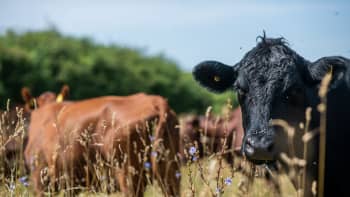
In 2024, an H5N1 avian influenza strain was discovered for the first time in dairy cows.
The highly pathogenic virus had already killed millions of wild and domestic birds around the world, and even infected some mammals. This new development showed that the virus had managed to jump to a new host species with which humans have extensive contact, making it more likely that it could target humans in the future.
Recent research1 by academics at Imperial College London showed how the H5N1 strain had evolved to replicate in mammalian cells, moving it closer to humans. But at the same time, they found that the virus' recent adaptations – which optimise its existence in the cattle's mammary glands – make it less likely to become airborne and easily transmissible between humans2.
Such information is vital to understand and monitor threats, and there are many precautionary approaches embedded within the scientific and regulatory community to ensure that this type of research does not itself become a danger.
For example, researchers will genetically manipulate similar, but less dangerous viruses to understand how a deadly virus works and evolves. This step reduces the risk of accidents and unexpected outcomes. It also means that when researchers work on the highly pathogenic form of a virus, they have a lot more information about how it could respond and can take appropriate containment measures.
All projects have to submit risk assessments to local and national regulators. These assessments state not only what researchers will do when genetically engineering a virus, but also what they will not do, and what steps they will take if something unexpected occurs.
However, there is no global agreement on how to manage these risks. It is essential that good practice is international and universal, and the UK, with its open and facilitating biomedical research system, could be a world leader in this area.
Alongside this scientific capability, institutions such as Imperial also benefit from extensive high-containment laboratory infrastructure, enabling work on hazardous pathogens to be carried out safely, securely and under tightly controlled conditions.
With the risk of zoonotic spillover increasing, the more researchers know about how viruses evolve, the better prepared everyone will be for the next pandemic.

Biosecurity at the Frontier
On Wednesday 10th June, Imperial will hold a high-level conference, Biosecurity at the Frontier, bringing together global leaders to examine emerging biological threats and the actions needed to address them. Moving beyond analysis, the conference will focus on building the frameworks, partnerships, and capabilities required to strengthen biosecurity globally.
References
1: Dholakia, V., Quantrill, J.L., Richardson, S.A.S., Pankaew, N., Brown, M.D., Yang, J., Capelastegui, F., Masonou, T., Case, K.-M., Ajeian, J., Woodall, M.N.J., Magill, C., Freimanis, G., McCarron, A., Staller, E., Sheppard, C.M., Brown, I.H., Murcia, P.R., Smith, C.M. and Iqbal, M. (2026). Polymerase mutations underlie early adaptation of H5N1 influenza virus to dairy cattle and other mammals. Nature Communications.
2: Shi, J., Kong, H., Cui, P., Deng, G., Zeng, X., Jiang, Y., He, X., Zhang, X., Chen, L., Zhuang, Y., Wang, Y., Ma, J., Li, J., Zhang, Y., Wang, C., He, C., Yang, J., Li, J., Liu, W. and Yang, J. (2025). H5N1 virus invades the mammary glands of dairy cattle through ‘mouth-to-teat’ transmission. National Science Review.
 Built with Shorthand